Word Tour
PlaySimple GamesWord
4.61.99K Reviews
- Version
- 1.160.0
- Installs
- 1.00M
- Age Rating
- Everyone
Screenshots
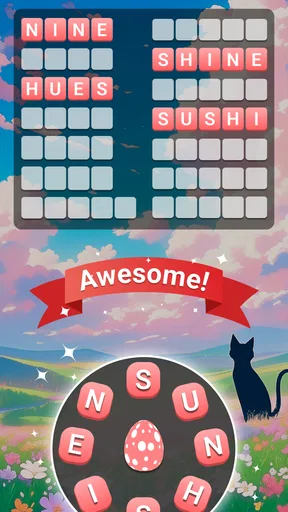
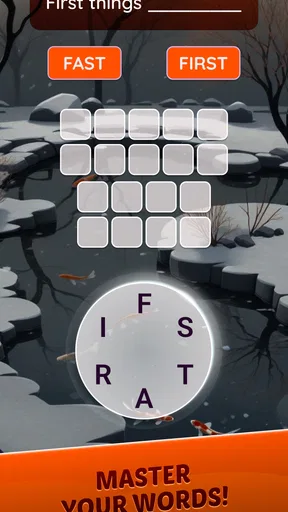
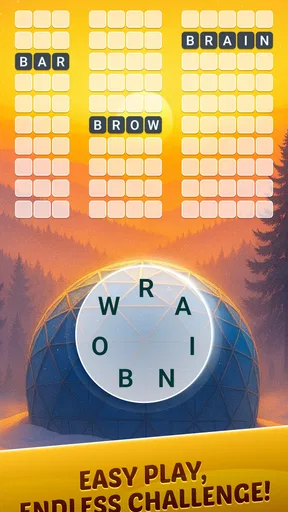
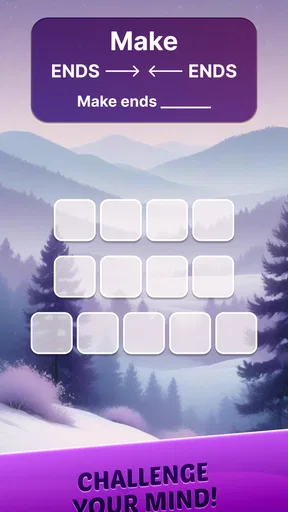
Our Review of Word Tour
 Analysis by Appyee
My first session with Word Tour began with a familiar word-game problem: a handful of letters, several possible combinations, and the nagging feeling that an obvious answer was hiding in plain sight. I started by tracing short words, then tested longer ones until the puzzle clicked. That simple action is the appeal: there is little to learn before you can play, but each board gives your attention something concrete to work on.
That makes it easy to fit into small gaps in the day. I can imagine playing a level while waiting for a drink, taking a short break between tasks, or winding down before bed. The useful question is not whether it can fill an evening—this is a light word puzzle, not a sprawling game—but whether its repeated little challenges feel rewarding enough to bring me back. For me, they do, as long as I want a relaxed pace rather than a demanding brainteaser.
A quick start, with a clear goal
The game is a word-puzzle title from PlaySimple Games, built around connecting letters to form words. Its short introduction eases new players into that basic action, so I don’t need to study a complicated rule set before making progress. The travel framing gives the levels a sense of direction: solving the current puzzle moves the journey along, instead of leaving me with a stack of unrelated boards.
When I play, I try a few likely words before reaching for help. That is a small but useful habit: it lets me enjoy the discovery without turning every uncertain moment into a hint purchase. If I’m stuck, a hint can give me a nudge, but using it too quickly can take away the satisfying moment of seeing the answer for myself. The best approach depends on why I opened the game—if I’m relaxing, I can linger; if I only have a minute, a prompt may help me finish and move on.
The rhythm of solving and feedback
The letter-connecting format feels approachable, but it still asks me to look at the same set of letters in different ways. A word that seems easy to spot can be missed when I focus too narrowly on one combination. I get more out of a puzzle by switching tactics: scan for short words first, then look for longer arrangements, and pause briefly rather than repeatedly swiping at guesses. That change of perspective is often more useful than rushing.
As the puzzles become trickier, the game has room to hold my attention without changing its basic rules. That steady progression is a strength for casual play: I can build confidence through familiar actions, while the growing difficulty gives me a reason to concentrate. It is also a limitation for anyone who wants a major change of pace or a very different puzzle mechanic. The appeal lies in refining how I spot words, not in mastering a collection of unrelated modes.
Rewards that give each level a purpose
Finishing levels earns coins, which can be used to buy hints, and the daily challenge offers another reason to return. I like that the reward connects to the puzzle itself: coins can help when I hit a stubborn board, while completing another level advances the trip. Still, I would treat hints as a reserve rather than the default way to play. Saving them for a genuinely frustrating puzzle keeps them meaningful and makes ordinary wins feel earned.
The game also gives the journey a visual marker through postcards collected from locations. That kind of progress is modest, but it gives a run of solved boards a more tangible endpoint than simply clearing one puzzle after another. The country settings and their facts and trivia add a bit of context between word challenges, although I see them as a pleasant extra rather than a replacement for a dedicated travel or learning app. If I open the game mainly for words, the setting is a bonus; if I expect detailed destination research, I would choose something built for that purpose.
When the social features help—and when they don’t
For players who enjoy a little friendly rivalry, connecting with friends and competing in weekly tournaments can add a personal reason to keep going. A leaderboard can turn a quiet solo activity into a shared one, especially if I already have friends playing. The chat feature offers another way to interact and exchange tips. These options are most valuable when I want a social layer; if I prefer word puzzles as private downtime, I can focus on the boards instead of treating competition as the point.
Compared with a traditional crossword, the letter-connection format asks me to build words from a supplied set rather than work through intersecting clues. Compared with a word-search game, it puts more emphasis on forming combinations than scanning a grid. That makes this a good fit when I want quick, self-contained word challenges, but not when I’m in the mood for clue-heavy solving, a paper-puzzle feel, or a long session devoted to one complex problem.
Discovering the World of Words
Word Tour is more than just your average word game. It’s like embarking on a virtual adventure where each level is a new destination. Imagine solving word puzzles while virtually traveling to iconic places around the globe. Sounds fun, right?
The game kicks off with a simple tutorial, which is great if you're new to word games. It eases you into the mechanics without overwhelming you. The interface is delightfully intuitive, with vibrant visuals that really bring each location to life. I found myself eagerly anticipating the next level just to see what beautiful backdrop would accompany the challenge.
Gameplay and Features
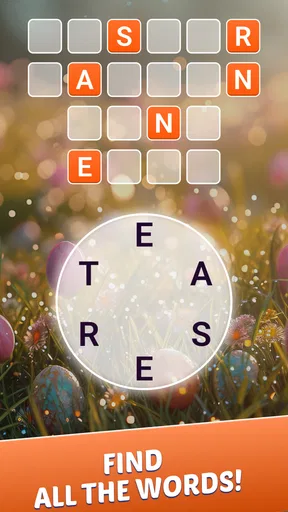
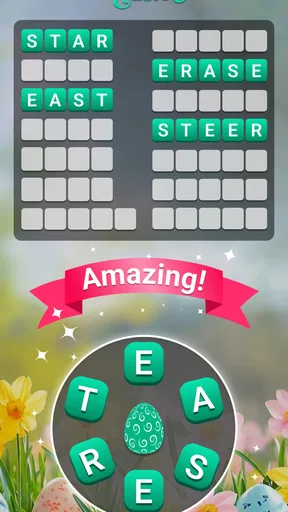
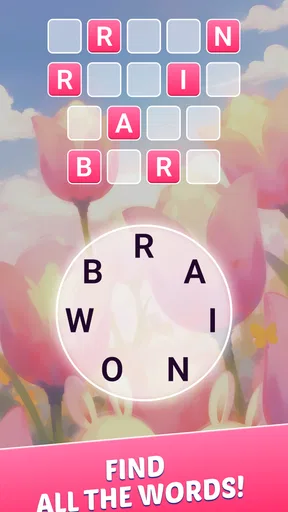
The core of Word Tour is its word puzzle format. You’re presented with a jumble of letters, and your task is to connect them to form words. It’s a bit like a crossword but with a twist. As you progress, the puzzles get trickier, which keeps things interesting.
One feature I absolutely love is the hint system. If you’re ever stuck (and trust me, you will be at some point), you can use hints to nudge you in the right direction. It’s a handy tool, but I found myself trying to solve the puzzles without it because, well, who doesn’t love a challenge?
Now, let’s talk about the rewards. Completing levels grants you coins, which you can use to purchase hints. There’s also a daily challenge feature that offers extra coins and keeps you coming back for more.
The Social Side of Word Tour
One of the aspects that sets Word Tour apart is its social component. You can connect with friends, and even compete against them in weekly tournaments. This adds a layer of friendly competition that makes the game even more engaging. I found myself checking the leaderboard more often than I’d like to admit!
Additionally, there’s a chat feature that allows you to interact with fellow players. Sharing tips, tricks, or just having a friendly chat enhances the community feel of the game.
Travel the World, One Word at a Time
The travel theme is beautifully integrated into the gameplay. Each set of levels represents a different country, complete with facts and trivia about the location. It’s a neat way to learn something new while playing. I’ve picked up some random fun facts that I didn’t expect from a word game!
As you complete levels, you collect postcards from each location. It’s a small touch, but it adds to the sense of accomplishment and progression. Plus, it's always nice to have something to show for your hard work.
Final Thoughts
Overall, Word Tour is a delightful mix of word-solving and virtual travel. It’s perfect for those moments when you want to unwind but still keep your brain engaged. The visuals are stunning, the challenges are satisfying, and the social features add a layer of excitement to the experience.
If you’re a fan of word games and enjoy a bit of friendly competition, I highly recommend giving Word Tour a try. Just be prepared to lose track of time – it’s that addictive!
So, are you ready to pack your bags and embark on a word-filled adventure? Download Word Tour and start your journey today!
What to expect before installing
The game is free to download, rated Everyone, and has a 4.7 average from around 15,000 ratings, with over a million installs. It was released on May 31, 2024, and version 1.144.0 requires Android 8.0 or later. Those figures suggest a well-established casual game, but they don’t tell me whether its style suits every player; the repetitive letter puzzle is the deciding factor.
In-app purchases range from $0.99 to $99.99 per item, so I would go in with a simple boundary: enjoy the free loop first and only consider spending if a specific purchase genuinely improves how I play. The coin-and-hint connection makes it especially easy to understand what help is for, but it also means impatient play can make optional spending tempting. I’d rather save hints for a real sticking point than treat them as a shortcut through every board.
A realistic routine, and a useful stopping point
Picture a short commute or a few minutes waiting for an appointment. I can open a puzzle, try the obvious words, and decide whether I have the patience to keep working when the answer does not come immediately. If the next task is approaching, I can stop after a level rather than feel obliged to turn a brief break into a long session. On a quieter evening, I might play longer to see the next setting or collect another postcard. That flexibility is a better reason to keep the game installed than trying to make every day a streak of extended play.
One practical tip is to separate “I’m stuck” from “I’m in a hurry.” When I’m stuck, I can step back and rearrange my thinking before spending a hint; when I’m in a hurry, using one may be a fair trade for a quicker finish. I’d also treat the country facts as small pauses in the puzzle flow, not as a study plan. That expectation keeps the travel theme enjoyable without asking it to do a job it was not designed for.
Who will enjoy the loop most
I’d recommend this to people who like word games but want something lighter and more visual than a clue-led crossword. It also suits players who enjoy collecting small signs of progress and appreciate a setting that changes the mood between boards. The daily challenge can provide a natural reason to check in, while the tournament and chat options may appeal to someone whose friends are already playing.
I’d skip it if I wanted a deep vocabulary course, a serious geography resource, or a puzzle game with lots of distinct mechanics. It is also not the best match for someone who dislikes repeating a core action: the satisfaction comes from spotting words in changing letter groups, not from unlocking an entirely new style of play. If competition makes relaxing feel like an obligation, the leaderboard may be more distraction than benefit; the solo puzzle is the stronger reason to play.
How the session ends—and why another begins
A completed level gives a neat endpoint: I have solved the board, gained coins, and moved the trip forward. That small cycle works well because the reward has a practical use and a visual one. Coins can support future hints, while the destination progression and postcards make the run feel like more than a pile of cleared puzzles. The next session is easy to imagine because there is another board waiting, but I don’t think the game needs to become a daily obligation to be worthwhile.
My main reservation is that this loop can blur together during a long stretch. If I’m no longer paying attention to the letters, the changing scenery alone is not enough to make every puzzle feel fresh. I get the best experience by playing in short bursts, taking a pause when I start guessing at random, and returning when I actually want another word challenge. That keeps the game’s gentle momentum from turning into mindless tapping.
My verdict on Word Tour
PlaySimple Games has made a friendly, accessible word game whose appeal is easy to understand: form words, earn a useful reward, see the journey progress, and decide whether to tackle one more board. Its combination of letter puzzles, destination visuals, postcards, and optional social play gives it a warmer identity than a bare collection of word grids. The trade-off is a familiar core loop, so its enjoyment depends on how much you like repeating that central act.
I’d try it if I wanted a free, low-pressure word puzzle for spare moments, especially if a travel theme and light competition sound appealing. I’d choose a crossword for clue-solving depth, a word-search for visual scanning, or a dedicated learning app for structured study. For the right mood, though, this is an easy game to return to: one more set of letters, one more solved word, and a clear point at which I can put my phone away.
Verdict
Strengths of Word Tour
- Engaging word puzzles enhance vocabulary.
- Challenging levels keep players motivated.
- Visually appealing design and interface.
- Offline mode available for on-the-go play.
- Regular updates with new content.
Limitations of Word Tour
- In-app purchases can be costly.
- Occasional ads disrupt gameplay.
- Some levels feel too repetitive.
- Limited hints without purchase.
- Requires internet for certain features.
Other Releases by PlaySimple Games
View All


Similar Picks in This Category
View All
Word Search - Word Puzzle Game
Bluetile4.8

Word Search Quest - Puzzles
Blackout Lab4.8

CodyCross: Crossword Puzzles
Fanatee, Inc.4.7

Words of Wonders: Crossword
Fugo Games4.9

Wordscapes: Word puzzle game
PeopleFun4.7

Word Search Explorer
PlaySimple Games4.9
Frequently Asked Questions
What is Word Tour and how does it work?
Word Tour is a word puzzle game designed to challenge and entertain players with varying levels of difficulty. Players travel virtually through different countries, solving word puzzles to earn points and unlock new levels. The game combines elements of word search and crossword puzzles, providing a unique and engaging experience.
Is Word Tour suitable for all age groups?
Yes, Word Tour is designed to be accessible and enjoyable for players of all ages. The game offers a range of difficulty levels, making it suitable for children, teenagers, and adults. Its intuitive interface and educational value, such as vocabulary enhancement, make it a great choice for family-friendly entertainment.
Does Word Tour require an internet connection to play?
Word Tour can be played both online and offline. While an internet connection enhances the experience by allowing access to additional features such as leaderboards and daily challenges, the core gameplay is fully available offline, making it convenient for users to play on the go without data usage concerns.
Are there in-app purchases in Word Tour?
Yes, Word Tour offers in-app purchases. Players can buy hints, additional levels, or remove ads for a smoother experience. While the game is free to download and play, these optional purchases can enhance gameplay. However, players can fully enjoy the game without spending money, as all levels can be unlocked through regular play.
How can I contact support if I encounter issues with Word Tour?
If you experience any issues with Word Tour, you can reach out to the support team through the app's settings menu. There is a 'Contact Us' option that allows you to send a message detailing your problem. The support team is responsive and aims to resolve issues promptly to ensure a smooth gaming experience.
Play our best games!


